Days 5-7: Sea on view !
September 29th – October 1st 2025 | Journey to Mayotte
Author : Judith
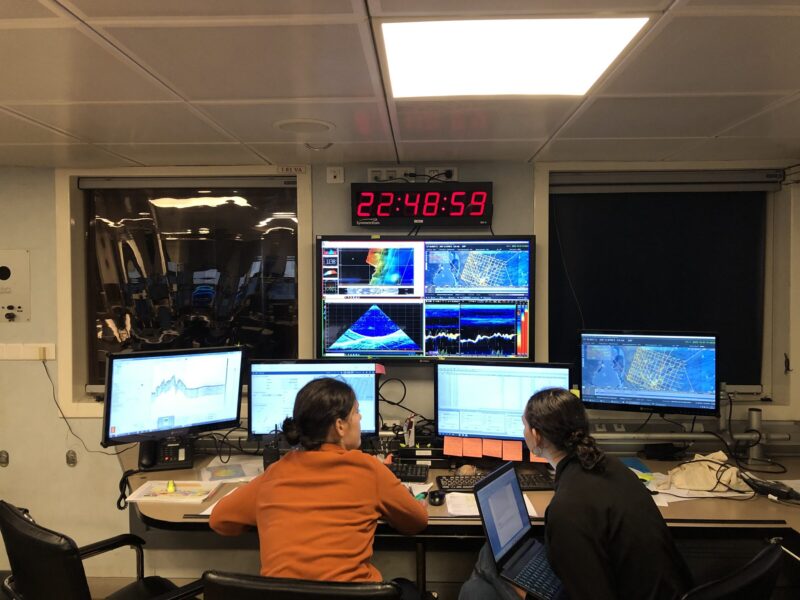
Above : Raphaëlle et Laëtitia during the watch between midnight to 2am. Crédit Photo Judith
The journey, by the Amber Cape, to the study area went smoothly with a calm sea at the entrance of the Mozambique Channel. The arrival on the study area marks the recovery of scientific watches and the start of the watches for students of the Floating University. Watches often last 4 hours, but to facilitate the rotation and enable all students to do 2 watches, our days and nights will be in rhythm of 2 half-watches of 2 hours everyone (watch Table). This planning enables us to attend the seminar and participate at meeting with Jacques to organise and plane the different tasks: redaction of seminars’ reports, logbook… In addition to their watches, Léa and Melvil participate during 1 hour, during the midday time, at the observation of marine mammals (MMO).
Acquisitions started on the way out of the Madagascar’s Exclusive Economic Area (ZEE), in the Glorious island’s ZEE, around 1pm the September 28th. So it is Raphaëlle and Laëtitia who kick off we the restart of the acquisition of bathymetric data (SMF), sediment profiler (SDS), magnetometer and gravimeter.
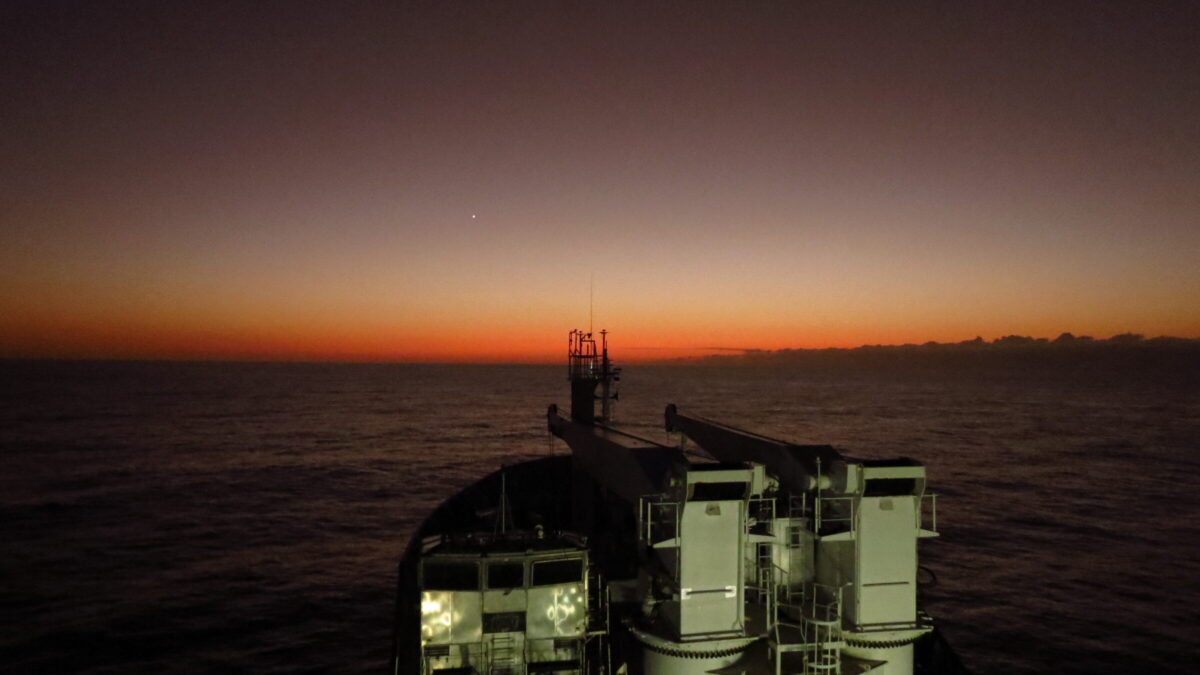
Figure 1. Sunrise around 4:30am. Photo credit: Judith
| 0am – 2am / 12pm – 2pm | Raphaëlle and Laëtitia |
| 2am – 4am / 2pm – 4pm | Judith and Jules |
| 4am – 6am / 8pm – 10pm | Taran and Lucie |
| 6am – 8am / 10pm – 0am | Melvil and Jade |
| 8am – 11am / 7pm – 8pm | Léa and Marie Eve |
The rhythm become speeder between watches, meetings and the planning of seminars. At the same time, everyone must find their own sleep rhythm to avoid the build-up of fatigue, whilst trying as much as possible of important moments. Some watches impact more the sleep, which transforms in big naps. In the evening, motivated people enjoy boards games à disposition dans le salon. Shifts are privileged and really stimulated moments where we end up with the scientific team. We learn a lot, particularly to analysis data in real time to try to explain and to interpret what we can observe. Beyond the scientific aspect, shifts are sharing times, conducive to discussion about our personal experiences.
To be operational during the shift, it is very important to know the technic words and to learn the name of various instruments (and there are a lot of ones!): EM122, EK80, EM170, ADCP, CIAM, OBS (in French) etc. It is also necessary to understand the sequence of operations, the change of times and when write the good observations to enable the treatment and the interpretation of data after.
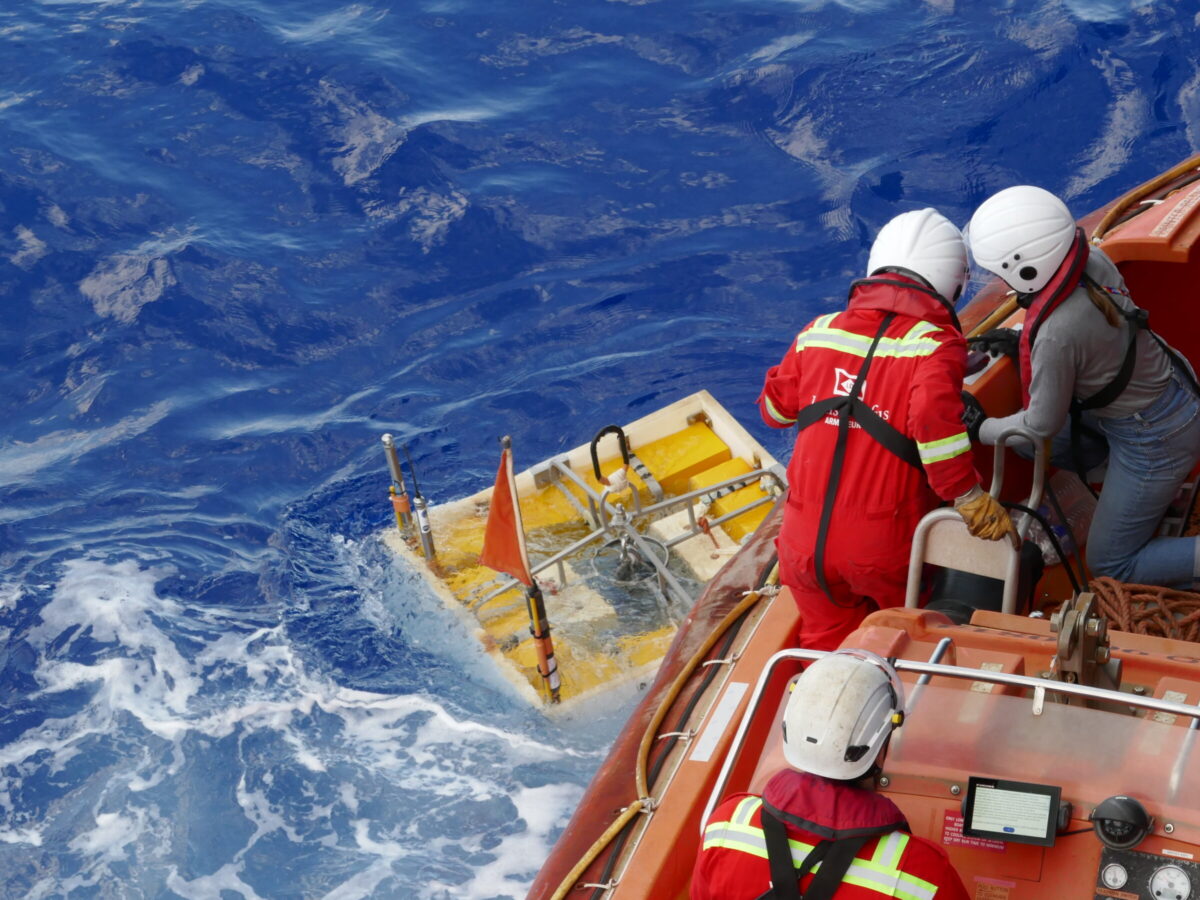
Even when the ship looks asleep, the night’s shifts continue. The “Science PC » is calmer than during the day and the atmosphere is particular. Someone go search a boost of energy from doughnuts and muffins to keep you going through the night. Students who have chosen the shift between 4am and 6am have the luck to watch the sunrise and like some operations need the dawn light to see better the instruments’ flash (OBS, hydrophone…), this watch is privileged to see these operations. The beginning of the deployment of the instruments also marks the emergence of a few technical issues that we will need to adapt to.
This time have been marked by the passage above the Fani Maore, the volcano which was born from the seismic-volcanic crisis and which is responsible for the MAYOBS campaigns for the monitoring of its activity (see Séminaire 1 of mission’ heads and Séminaire 4 by Fabien). The shift post was full of people to « see » it through the bathymetric data. The ship is going now to the “Fer à cheval” area (FC), above which a lot of operations will be scheduled.
 Attention, vous utilisez un navigateur peu sûr !