A marine biologist, Sylvain is researching the toxicity of microalgae
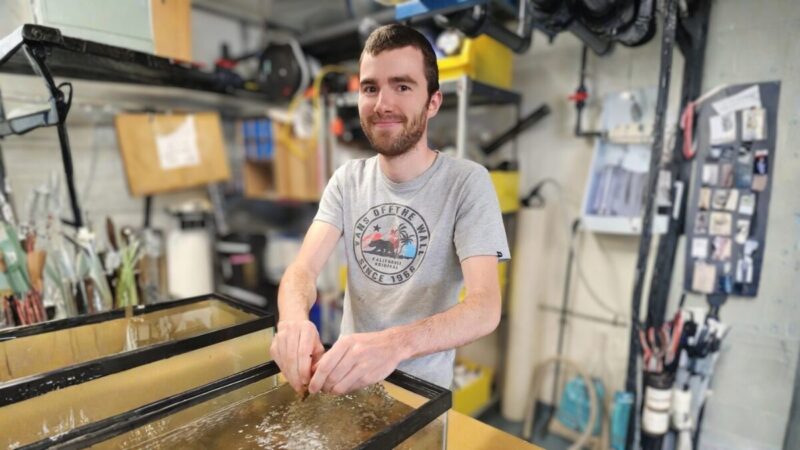
Although invisible to the naked eye, phytoplankton is essential to life in the oceans. However, certain microalgae can produce toxins that spread through marine food chains. It is this phenomenon that fascinates Sylvain, a postdoctoral researcher at LEMAR. After working in Nantes and at several renowned research institutes in the United States, he is now studying the effects of toxic phytoplankton on marine animals and the fate of these toxins in ecosystems.
Supervised by Caroline Fabioux and Hélène Hégaret, his project falls under ISblue’s Theme 4 “L’océan vivant et les services écosystémiques“.
Who are you, and where are you from?
I’m from the Vendée region, near Nantes, where I also went to school. I first earned a bachelor’s degree in life and earth sciences, then went on to specialize in marine biology for my master’s degree.
How did you hear about the ISblue postdoctoral call?
JI heard about the call for proposals from my thesis co-advisor, Hélène Hégaret, a CNRS Research Director at LEMAR.
My postdoctoral fellowship began in early 2026 and will last two years.
What is your current research topic?
I am studying the fate and transfer of toxins produced by certain toxic microalgae (microscopic algae) in marine animal species that are harvested but have not yet been extensively studied, in Brest Harbor. The goal is to better understand how these toxins accumulate in different tissues, are transferred through food chains, and how quickly the animals can detoxify themselves. This research will help identify risks to marine ecosystems and, potentially, to human health. We will conduct both sampling campaigns in Brest Harbor during toxic microalgal blooms to collect animals – such as spider crabs, crabs, shrimp, and sea bream – and laboratory exposure experiments.
What was your background before you got to this place?
After completing my thèse at Ifremer de Nantes (2017-2020), I went on to complete two postdoctoral fellowships in the United States, first at VIMS (Virginia Institute of Marine Science de 2021 à 2023) and then at WHOI (Woods Hole Oceanographic Institution, 2023 – 2025), before beginning my ISblue postdoctoral fellowship in Brest at the LEMAR laboratory (2026-2028).
What made you want to work in marine science?
It was during my studies that I really decided I wanted to pursue marine science. I completed my first internship during my first year of master’s studies at a marine biology laboratory (ISOMer, Nantes), focusing on microalgae, and I immediately loved the experience. I then enrolled in a second-year master’s program in marine biology and completed a second internship in this field at the University of Szczecin in Poland. From that point on, it seemed obvious to me that I should continue down this path.
What is your day-to-day life like as a researcher?
My day-to-day work is very varied. It involves designing experiments, setting them up, and carrying them out, as well as mentoring students and teaching. A large part of the work then involves analyzing the results and disseminating them through publications or conference presentations. It’s also important to stay on the lookout for professional opportunities, prepare applications, and plan the next steps in one’s career.
What is your best memory from the field or from your research?
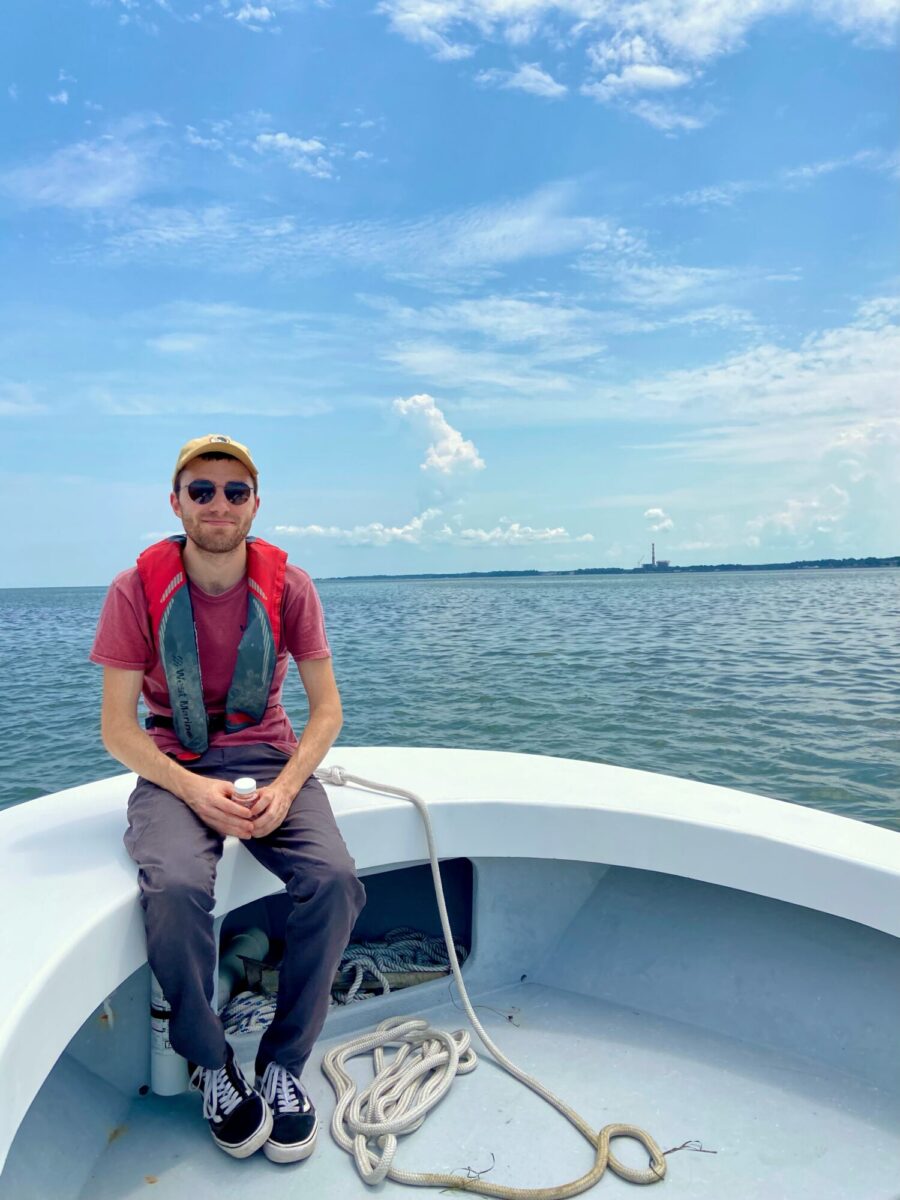
I have many wonderful memories, both from my experiences in the lab and from sampling expeditions at sea. There are also the conferences, which have allowed me to discover places I probably would never have visited otherwise.
Is there an achievement you’re particularly proud of?
I am particularly proud to have been able to continue my work on toxic microalgae for several years now. It is a field that fascinates me, and I have been fortunate to be able to pursue my research on this topic through various projects, both in France and abroad.
Has there been a failure or a challenge that really stuck with you?
I work with living organisms whether microalgae or marine animals so there’s always an element of the unexpected. Some experiments don’t go as planned, and failures are part of research.
Do you have any ideas or plans for after your postdoc?
After completing this postdoctoral fellowship, I would like to continue developing my own research projects and secure a permanent position at a university or research institute.
And outside of research, what helps you disconnect?
Since I arrived in Brest not long ago, I’m exploring Finistère and mostly spending time with my friends.
More informations
- Google Scholar page of Sylvain Gaillard
 Attention, vous utilisez un navigateur peu sûr !