Behind the scenes of scientific publishing : a look back at the second event
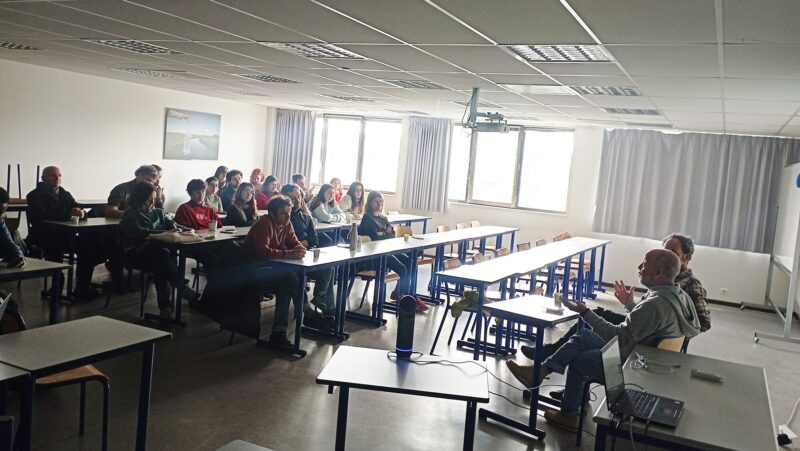
On 26 March 2026, the second session of the series ‘Behind the Scenes of Scientific Publishing’ took place, focusing on the criteria to consider when choosing a journal in which to publish one’s research.
The meeting was chaired by Fabrice Pernet (LEMAR, Ifremer) and Linwood Pendleton (AMURE, UBO), editors of the ICES Journal of Marine Science alongside Olivier Thébaud (AMURE, Ifremer) editor of Aquatic Living Resources.
The discussion focused on the selection criteria for scientific journals: objectives regarding peer review and the dissemination of knowledge, ethics, impact factor, interdisciplinary openness and publication models (Gold or Diamond Open Access). The discussions shed light on editorial processes, the challenges associated with managing submissions, and the differences between scholarly society journals and commercial publishers. The issues surrounding open access, its costs, and the need to target specialist journals were also addressed.
Fabrice Pernet and Linwood Pendleton have taken up their posts at the ICES Journal of Marine Science éditée par Oxford University Press1, a journal that had its origins in fisheries and aquaculture, but today has broaden to include all aspects of marine science including social sciences and economics. ICES is recognised for its significant impact and high ethical standards, including a mentoring programme for early-career researchers.
Olivier Thébaud presented Aquatic Living Resources2, a journal focusing on ecosystem-based approaches to the study of aquatic socio-ecological systems, integrating biological, ecological, economic and social dimensions. Having transitioned to Diamond Open Access3 thanks to support from Ifremer, IRD and the publisher EDP Sciences, it has seen a sharp rise in submissions, with an acceptance rate of around 10%.
The role of editors-in-chief was discussed, highlighting their collective responsibility for ensuring the scientific and disciplinary integrity of journals. Publication decisions take place within a complex landscape characterised by a variety of open-access models. The publication fees for articles in the ICES journal (approximately €3,000) are not dependent on authors’ financial means, with exemptions available, and are used to support the scientific community.
The discussions highlighted a growing preference among stakeholders for non-profit journals, emphasising the importance of peer review and relevance to the target community. The issue of funding for these models remains a challenge, despite support from research organisations such as Ifremer, INRAE and IRD.
Publication costs per article vary significantly between journals (ranging from a few hundred to several thousand euros). Whilst these costs partly reflect the resources required for editorial work (particularly human resources), this variation nevertheless raises questions about the journals’ business models. Affiliation with a learned society is generally seen as a mark of quality.
The speakers discussed the role of specialist journals in developing the intellectual capital of members of the relevant scientific community. This is one of the reasons why ICES JMS gives priority to review articles and detailed, constructive editorial comments. The quality of review articles is a criterion which, according to the speakers, many overlook when choosing where to submit their research.
The international operations of the two journals were discussed, as were the practices of rapid rejection, which are often linked to a mismatch with the editorial line and aim to avoid unnecessary delays for authors.
Statistical data highlighted the selectivity of journals (high rejection rates even at the pre-screening stage), underscoring the importance of strategic targeting based on scientific networks and disciplinary communities. Emerging alternatives such as PCI were also discussed.
Finally, the role of learned societies was clarified: as associations led by scientists, they contribute to the quality and governance of the journals affiliated with them. The challenges facing interdisciplinary journals in France in terms of visibility were highlighted, as was the need to enhance their recognition in academic rankings.
More information :
References :
- ICES Journal of Marine Science published by Oxford University Press: https://academic.oup.com/icesjms
- Aquatic Living Resources: https://www.alr-journal.org/
- Diamond open access: https://www.unesco.org/en/diamond-open-access
 Attention, vous utilisez un navigateur peu sûr !