Matthis Auger, a physical oceanographer, is exploring the ocean currents around Antarctica
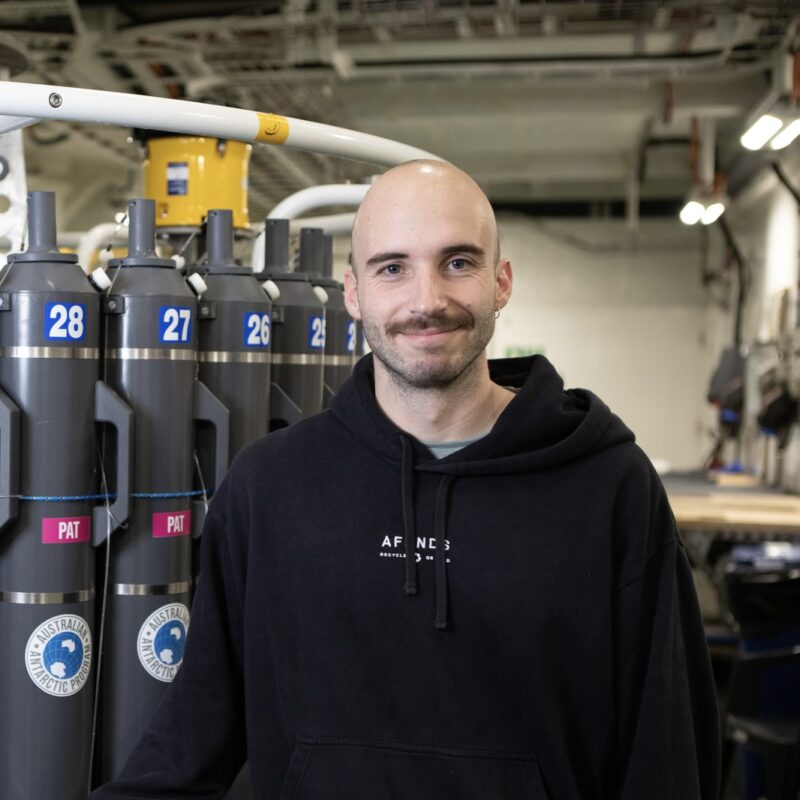
He is currently a postdoctoral researcher at LOPS in Brest, where he is studying the transport of warm water towards the Antarctic continent and the formation of dense water, which influence global ocean circulation.
Under the supervision of Camille Lique, in collaboration with Carolina Dufour and Nicolas Kolodziejczyk, her project falls under ISblue’s Theme 1, “Ocean Climate Regulation” and Theme 5, “Long-Term Observation Systems for Ocean Science“.
Having studied at ENSTA, Brest Campus, and the Sorbonne, followed by a postdoctoral fellowship in Tasmania, he has built a career spanning modelling, satellite data and fieldwork at sea, notably in Antarctica aboard the icebreaker Nuyina. Against a backdrop of extreme field conditions, scarce data and major climate challenges, he reflects here on his career and his vision of polar oceanography.
Who are you and where are you from?
My name is Matthis Auger; I am a physical oceanographer currently doing postdoctoral research at LOPS in Brest, and I come from the Bordeaux region.
How did you hear about the ISblue postdoctoral call?
I was looking for scholarship opportunities that would allow me to return to France, and specifically to Brest. I also wanted the chance to work on my own research project, and ISblue makes that possible.
My postdoc lasts two years and began in January 2026.
What is your current research topic?
I am working on ocean currents around Antarctica. On the one hand, I am studying the flow of warm water towards the pole, which can affect the melting of the Antarctic ice sheet. On the other hand, I am studying the formation and export of dense water from the Antarctic continental shelf, which has a direct impact on global ocean circulation and the climate. These circulations are still poorly understood today; a better understanding of them would help reduce uncertainties in future climate and sea-level projections.
What was your journey like before you got to this point?
I studied at ENSTA in Brest between 2015 and 2018, completing a dual degree alongside a Master’s in Physical Oceanography at the University of Brest (UBO). I then undertook a PhD at Sorbonne University, working between Collecte Localisation Satellite (a company that produces satellite data for oceanography) and the LOCEAN laboratory in Paris. At the end of 2022, I joined the University of Tasmania in Australia for a three-year postdoctoral fellowship, which I completed in December 2025.
What made you want to work in marine science?
I’ve always been fascinated by the ocean, but it wasn’t until quite late in my studies that I realised I could actually study the subject in depth. I also wanted to contribute to our understanding of the climate system, whose variability and changes are directly linked to the ocean.
What is your day-to-day life as a researcher like?
In my day-to-day work as a researcher, my main tasks involve reading scientific articles, processing and analysing data, and writing scientific articles and reports. I also enjoy collaborating with other researchers on topics that are more or less related to my own.
What is your greatest memory from the field or from your research?
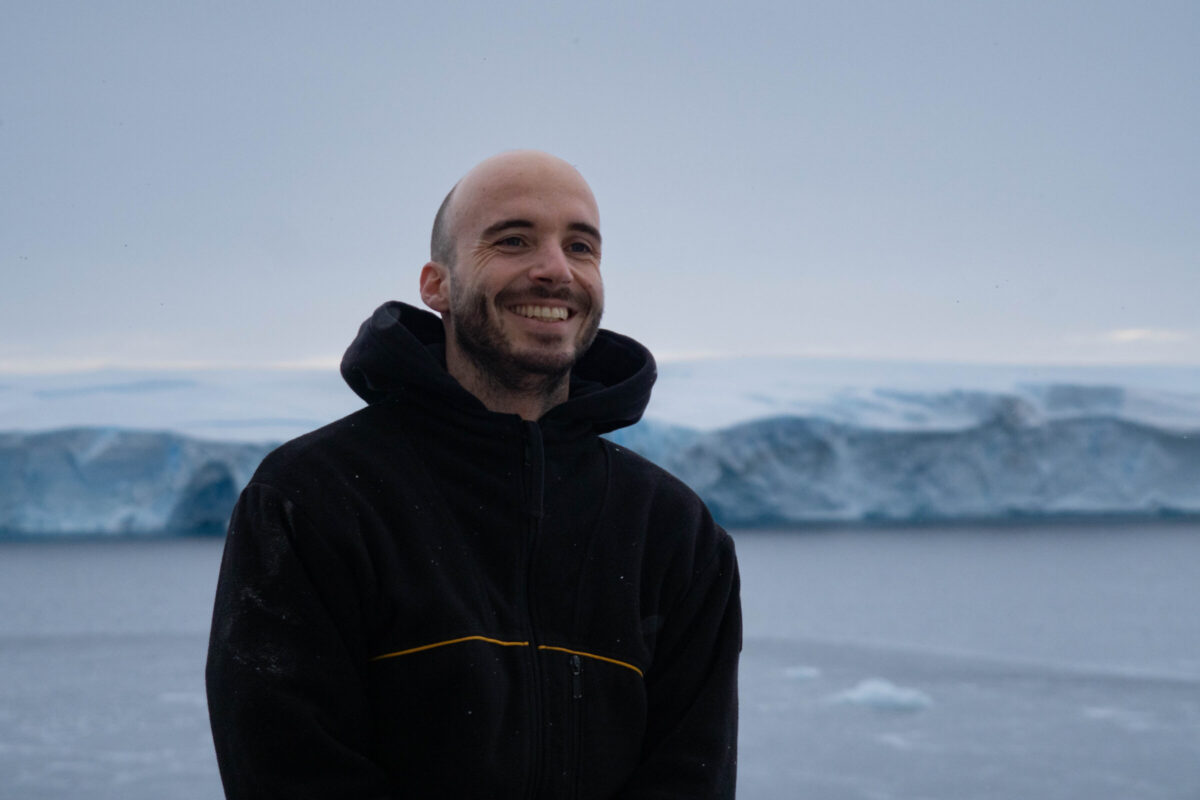
I undertook two oceanographic expeditions to Antarctica during my research career. One of them took place in March–April 2025, aboard the Australian icebreaker Nuyina, at the start of the sea ice formation season. We found ourselves in the middle of a storm amidst ‘pancake ice’ (freshly formed sea ice consisting of pancake-shaped pieces of ice), which undulated to the rhythm of waves several metres high. It was a truly impressive experience. It was also a special expedition because we were able to reach and map areas closest to the Denman Glacier that had never been reached before.
What is the biggest challenge in your field today?
There are still many challenges facing Antarctic oceanography today. It is a region that has undergone many rapid changes over the last 10 years, the causes of which remain unclear (a slowdown in certain ocean currents, rapid sea ice melt, and rising ocean temperatures). Quantifying and understanding these abrupt changes is a huge challenge, as they have a direct impact on the climate and sea level, and indeed account for a large part of the uncertainty in future climate projections.
Is there a particular achievement you’re especially proud of?
During my research, I developed and analysed a satellite dataset that enables the detection of ocean currents even in the presence of sea ice. In polar regions such as Antarctica, ocean observation data are very scarce. Today, these data are increasingly used by the scientific community, and I have been able to demonstrate that they are useful for describing physical processes that are poorly understood but have a significant impact on global ocean circulation and climate.
Has there been a failure or a difficulty that really stuck with you?
I would say that my research experience has been marked by many small setbacks rather than a single major failure. Polar oceanography often relies on very limited data, which we compensate for by combining several data sources or using certain statistical analyses. There are many times when you think you’ve found the solution to a problem, you spend a lot of time implementing it, but in the end the solution doesn’t prove conclusive. You then have to retrace your steps and not let it get you down.
Do you have any ideas or plans for life after your postdoc?
I am currently considering setting up a regional laboratory in the Adelie Land region of Antarctica. This is the region where the French Dumont d’Urville base is located, which is resupplied several times each summer by the Astrolabe. The presence of this vessel in this isolated region presents a huge opportunity for conducting observations at sea. Combined with satellite measurements that allow us to observe the ocean surface, this regional laboratory would enable us to characterise ocean currents that are still largely unknown, with results that could be extrapolated to the entire Antarctic coastline.
And apart from research, what helps you switch off?
Apart from research, I love being outdoors: cycling, surfing whenever I can… But I also enjoy trying to learn to play music and spending time with friends!
Further information
- Matthis Auger Google Scholar page
 Attention, vous utilisez un navigateur peu sûr !