Days 12 – 16 : back to the area, from Petite-Terre to Fani Maoré
October 6th – October 10th 2025 | Last deployements
Author : Raphaëlle
After have spent a very beautiful day in the lagoon, we set off again to new adventures offshore. The evening’s sunset is so beautiful and terrible, we can see red and orange rays of light going through the fires which are devastating an area of the island. They are made up of the degeneration of a fire lit for the slash-and-burn farming, traditional on the island.
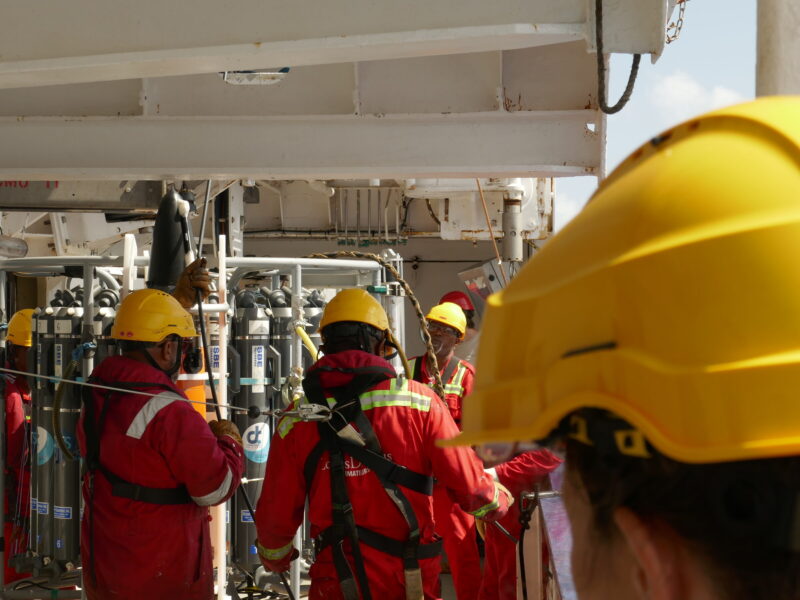
As the earth recedes once more, the usual activities on board resume: everyone gets back to work, acquisitions and watches are being relaunched quickly. This new part of the mission is very important, we must finish some manipulations, and particularly redeploy every instrument which were recovered during the mission, taken to the workshop for maintenance work, and from which data was extracted. The monitoring being constant, the implementation of the network must be optimal and full.
Everyone is relieved by the end and the success of this big step of the October 5th, nevertheless the fatigue begins to be felt. Everyone works without count their hours. During watches, there are a lot of things to doing, particularly when we pass by the “plumes’ road”, which we begin to knowing well. Plumes are visible with the the EM122 multibeam echo sounder and the EK80 single-beam echo sounder (Sea page Imagery in French), we must watch live the water columns’ data to identify them. Our watches managers start to let us some autonomy, so we must be very concentrated to don’t miss something.
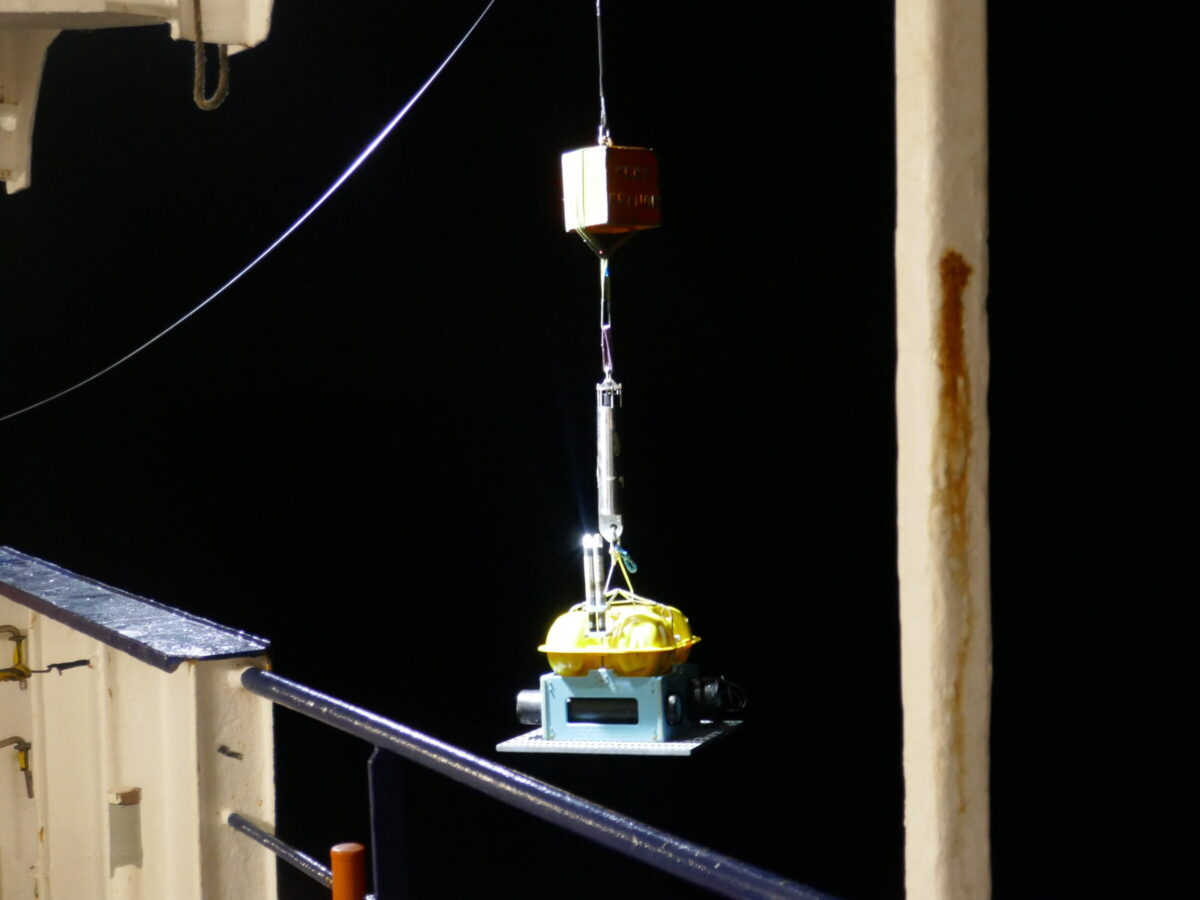
During the night’s watch, the present students have assist at the deployement of OBS (Figure 1 – also see the page on OBS). It is an operation particularly stressful : the managers are in direct and continue communication with the crew members who operate the cable used to lower the instrument to the seabed. In the PC-Science, everyone follow the descent and there is a sense of relief when we announce which it is placed and stabilised. The atmosphere of the night makes these moments particularly strong and unforgettable, the wake up worths it.
Figure 1. Opération of OBS’ deployement during full night. © Melvil
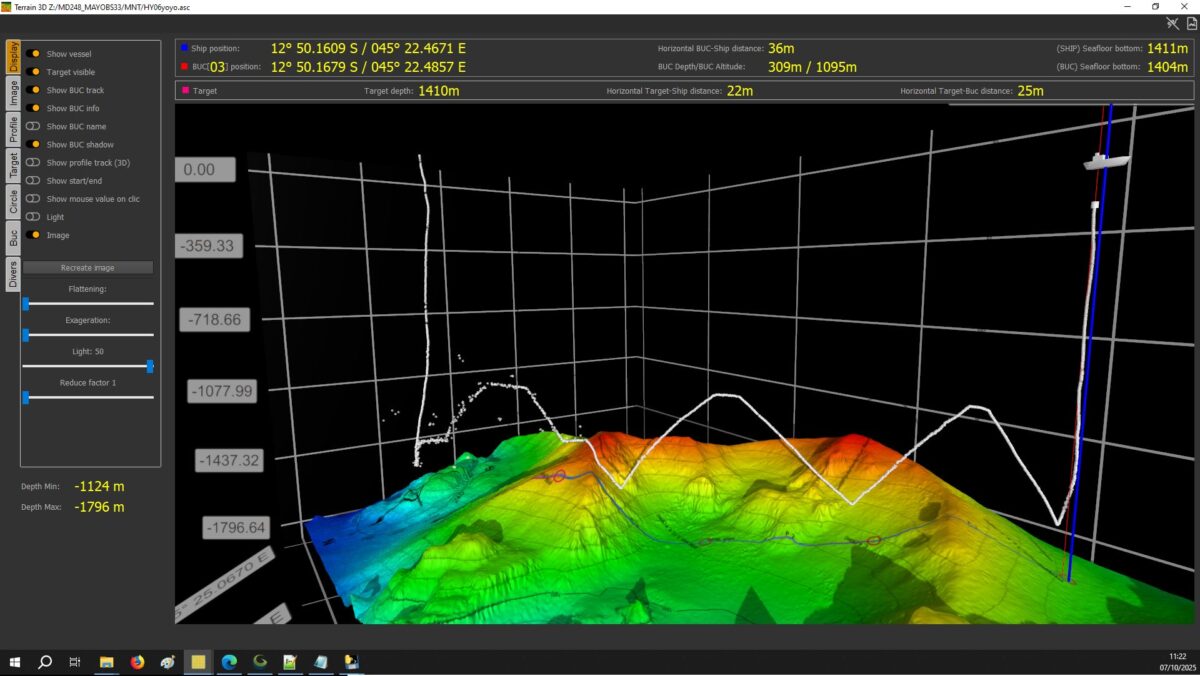
The operations continue also during the day and can occupy long times. The October 7th takes place a particularly technic and interesting: a “yo-yo” CTD-Glider (Figure 2). She takes around 7 hours and consist to sequency of descents and recoveries of the device, linked with the movement of the ship which is moving forward. It produces a particular trajectory, which reproduces a Glider’s movement.
Figure 2. Trajectory « Yo-yo » of the CTD-Glider. © MAYOBS-33 campaign
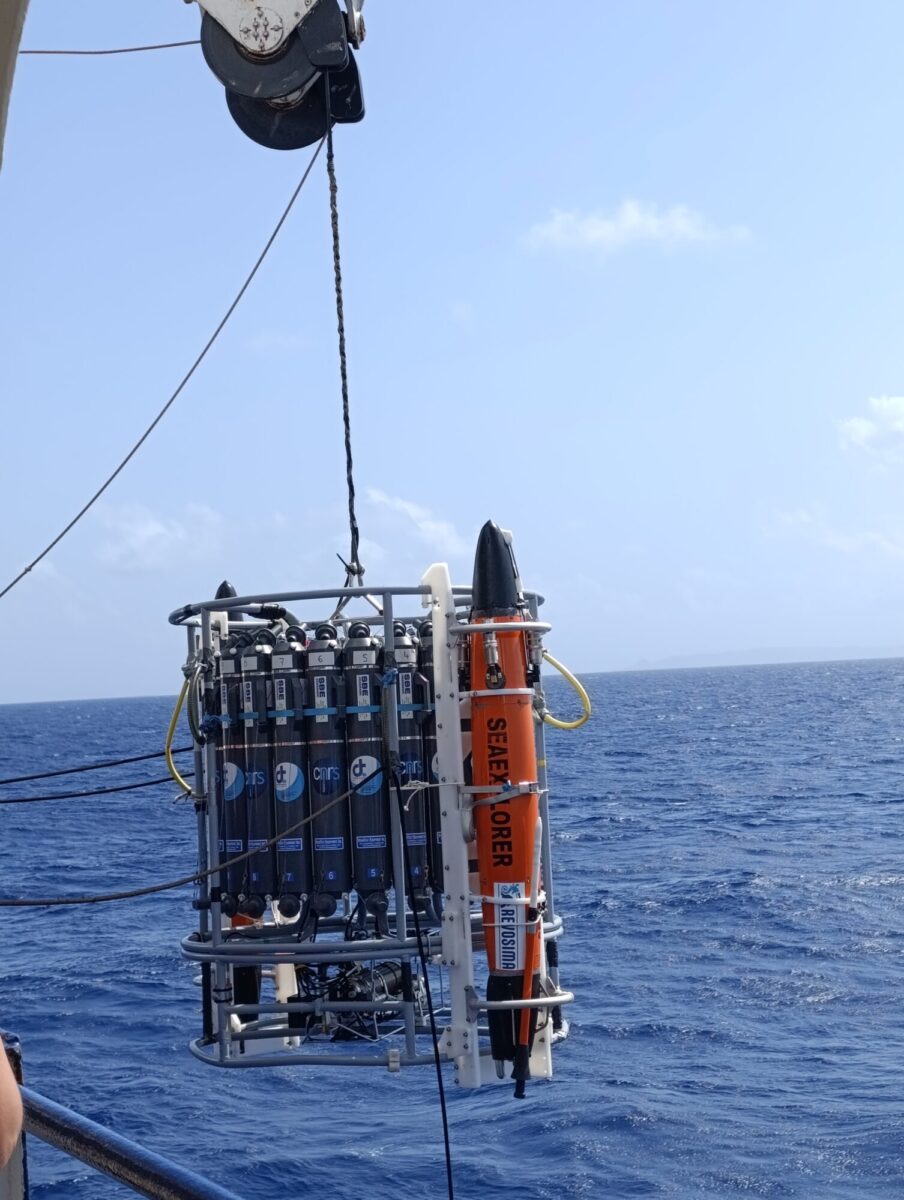
The Glider being stuck to the CTD (Figure 3), it permites to scientists to calibrate it, and verifie that the data are consistent with those obtained by the CTD.
Like the mission’s end comes, we have the occasion to doing some visits of the ship, particularly of the machines, what you can find again in the rubric MAYOBS33-information.
The same evening, during the 0-4 watch, we could assist to a new dredgning operation.
Figure 3. Gliders secured to the CTD for the operation « Yo-yo ». © Jade
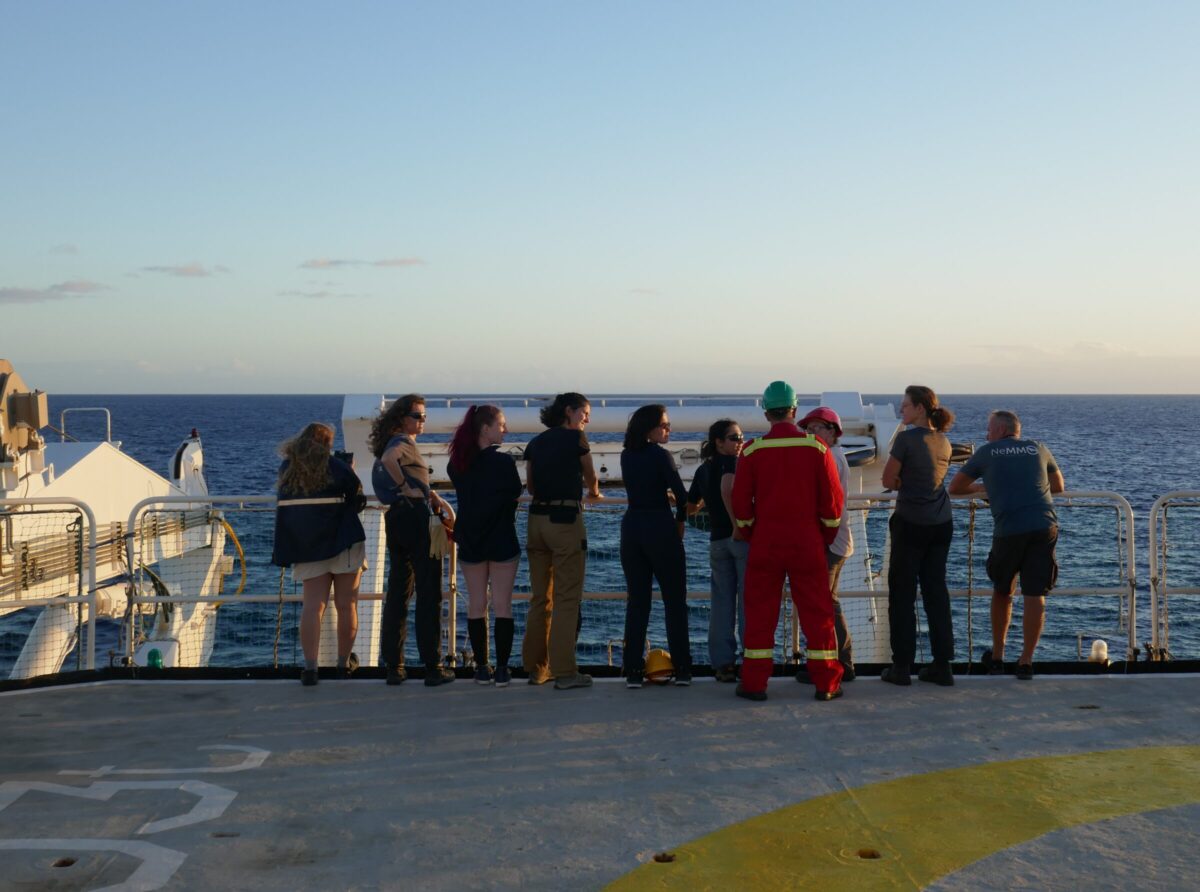
Everyone loves follow this manipulation from the deck, outside (Figure 4), to see the result obtained (and the geologist more, often really happy to see stones), but it is just as exciting to see it from the PC-Science. We can understand better the technical aspects, what we explained in details in the rubric Instrumentation, page Dredging. Everyone comes in the days that followed to visit the “Team” Dredging, who can provide explanations, and advises us about some little samples to take away.
Figure 4. All the curious on the DZ to follow the raising of a dredger. © Melvil
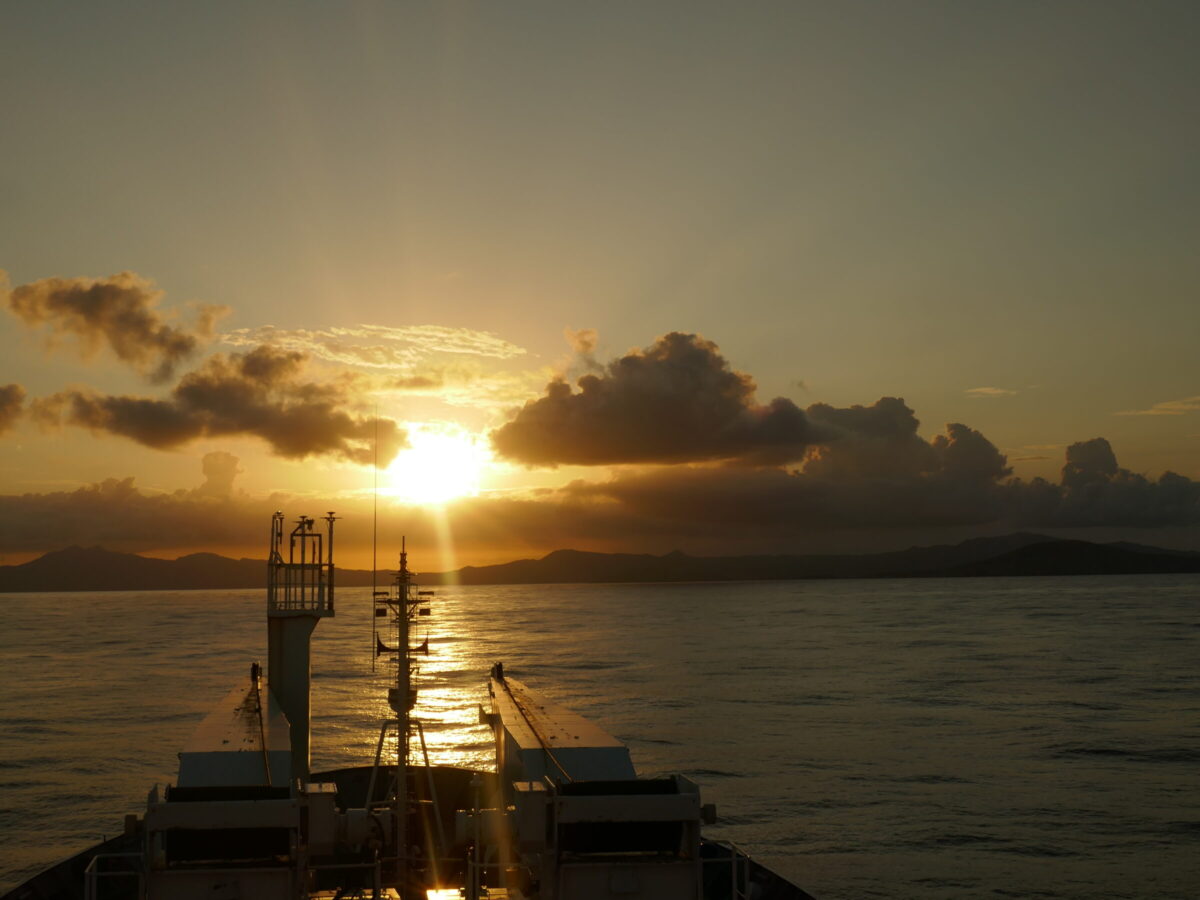
After these days to sailing around the Parfums’ island, it is the time to say it goodbye. (Figure 5). We head back, after have finished the las manipulations. We pass above the Fani Maore to take last pictures, by following paths perpendicular to the previous ones, in order to improve the resolution of the Digital Elevation Model (DEM) in certain covered areas. We leave totally the Mayotte’s waters, to be again surrounded of water as far as the eye can see.
Figure 5. One of the last (very beautiful) sunsets on Mayotte what we have the luck to see before leaving the Mayotte’s waters. © Melvil
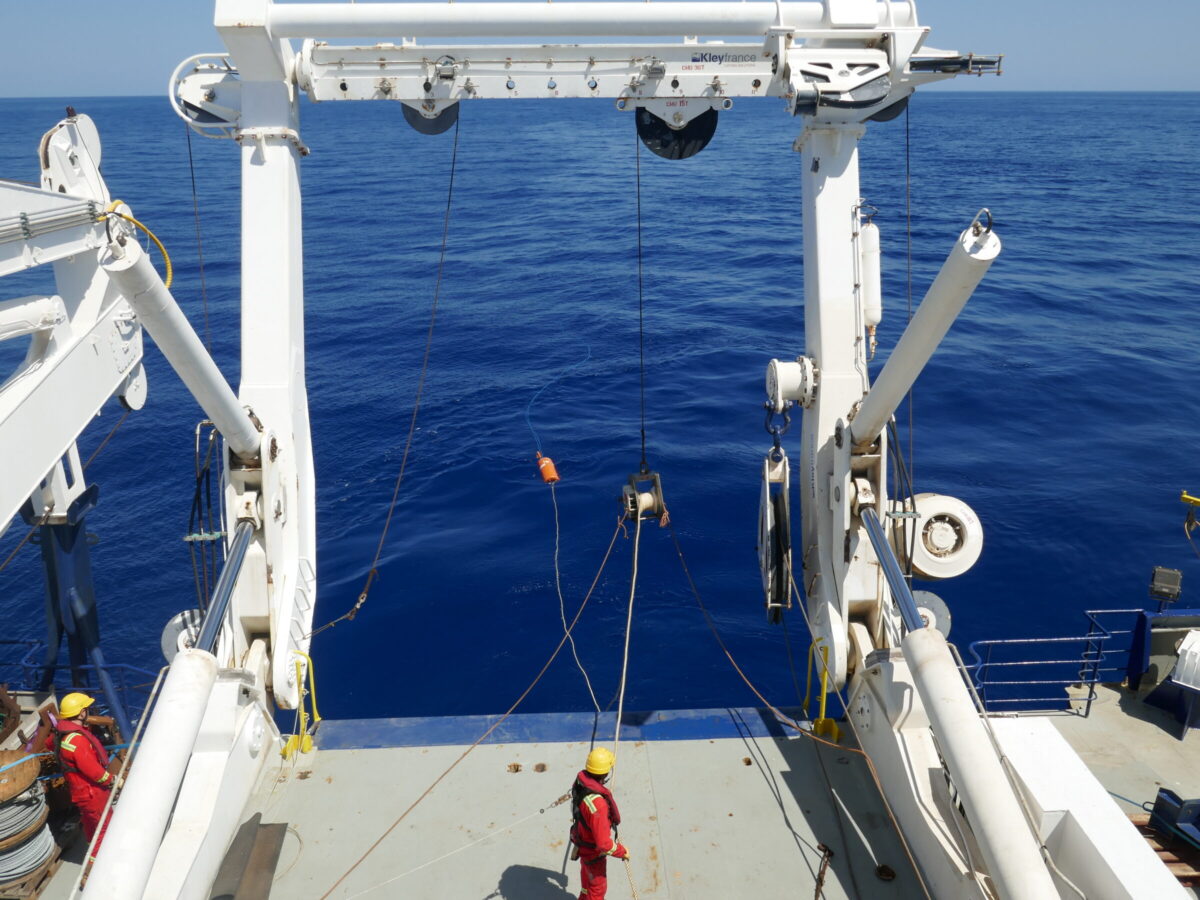
There are still a few tools left to roll out, particularly an hydrophones’ line (Figure 6 – see page Hydrophone), during a delicate operation which consist to let a buoy in the water and go during some kilometres before to drop the ballast above the mooring point.
Figure 5. Hydrophone’s deployment. © Melvil
A « CTD » (see page CTD-Rosette) and a new OBS’ deployment complete this day, and like this finish the campaign, after 26 versions of the operations’ planning! Now comes the time to the transit, where only the depth sounder, the gravimeter and the magnetometer operate. Let’s go to the Amber Cape!
 Attention, vous utilisez un navigateur peu sûr !