Visit in the wheelhouse
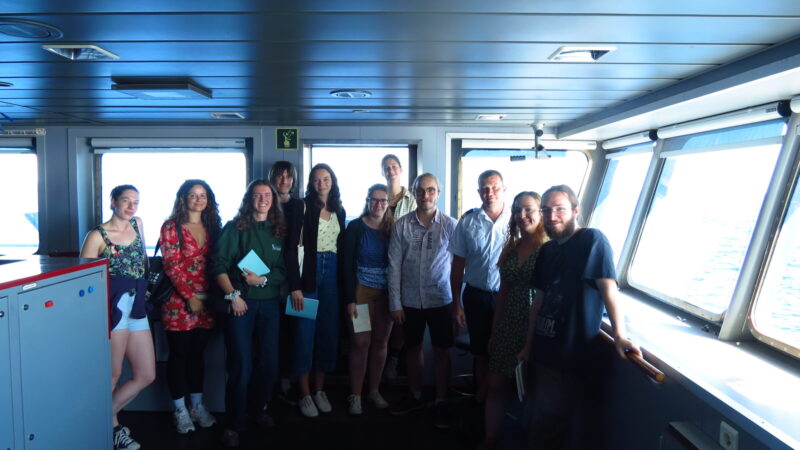
Sunday September 28th, we could to visit the Marion Dufresne’s wheelhouse with the ship’s captain Sébastien PLOUZOT. This visit permitted to tell about different important topics la the introduction of the ship, the function of the wheelhouse, the navigation, the risks, the issues and also the management of water and on-board facilities.
Introduction of the ship
The oceanographic ship Marion Dufresne (Figure 1 at the top) has the particularity to be the biggest ship of the Oceanographic French Fleet (FOF) with impressive dimensions of 120,5 metres (395,34 foot) long and 21 metres (68,9 ft) large. This ship, the most iconic ship of the FOF, was put into service in 1995. It is equipped by Louis Dreyfus Armateur (LAD) and sous-charted by the French Southern Territories and Antarctica (TAAF) to supply technical and scientific staff, as well as equipment and provisions. The Ifremer also sous-charts the ship to realise oceanography in geosciences, physic, chemistry and biology campaigns; the mission MAYOBS-33 is one of them.
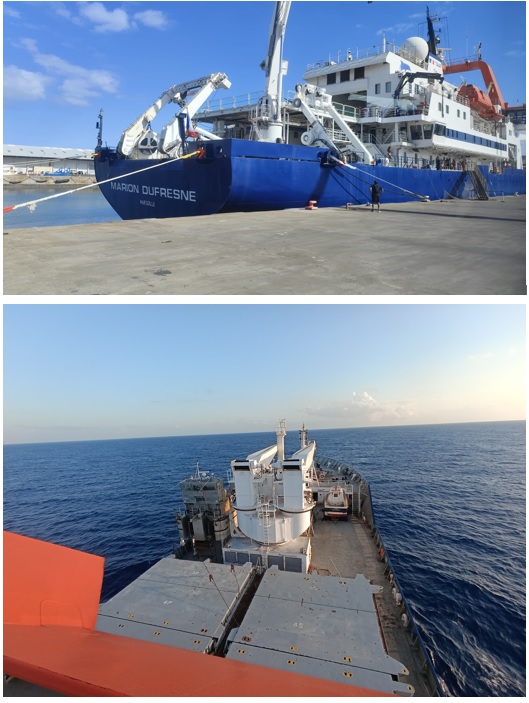
The ship can welcome up to 110 passengers. For the mission, there were 48 crew members and 58 scientists (including the students). For storage, two big chocks located at the front of the ship are reserved for supply shipments bound for the Southern Territories. Similarly, during the scientific missions, two chocks at the back contain the scientific equipment. Another one at the back of the ship called oceanographic is used for the storage of the scientific equipment. In total, including the space of the front range (figure 1 bottom), the ship can store the equivalent of 100 containers.
Figure 1. Top : the ship Marion Dufresne at the platform in La Réunion. Bottom: View at sea from the front deck. © Jules et Jade
Operation of the ship
When the ship is used for oceanographic campaigns, all the manoeuvres (collection of samples and reception of devices) are done on the boat’s right side. This side, said “clean’, is only used by scientists. On the other hand, effluents are released on the left side, said “dirty”. This organisation permits to avoid the contamination of the samples collected during the scientific operations.
The Marion Dufresne can reach the speed of 17 knots but the average speed chosen during the campaign is10 knots to limit the consummation and to ensure the quality of the data. The ship is powered by two propellers powered by three generators, which provide greater flexibility whilst sailing. It has a theoretical autonomy at sea around 5 to 6 months which will be in practice limited by the fresh food like for the fruits and vegetables (1 month). The drinking water is not a problem because it is produced on board by desalination (filtration by osmosis and evaporation using a boiler, followed by remineralisation.
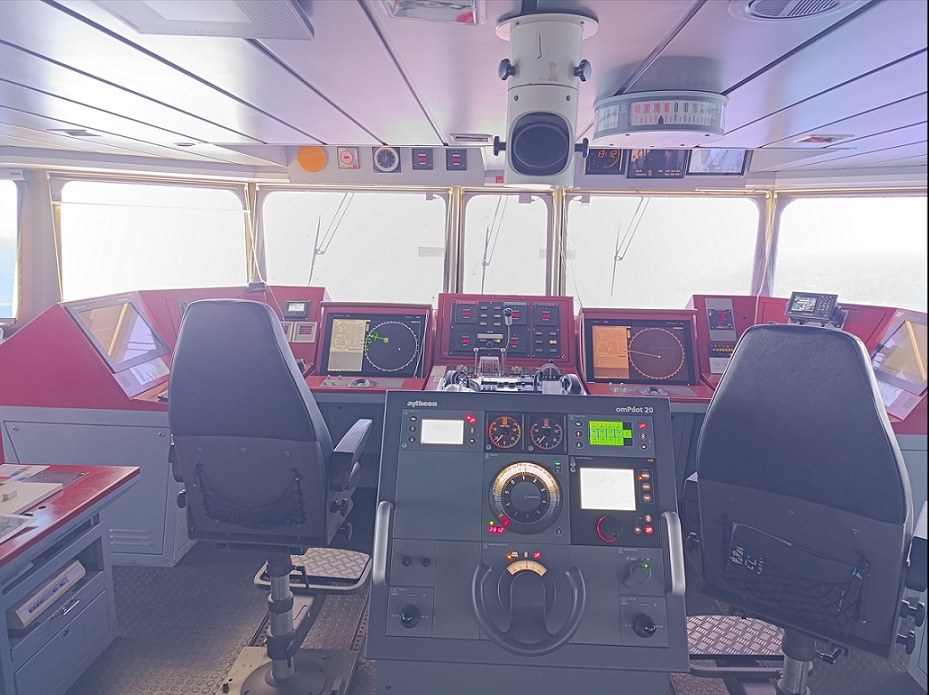
The wheelhouse, located on the deck H, constitutes the ship’s main command post (Figure 2). It centralises information linked with navigation, the planning of operations, the follow the monitoring of the machine block (propulsion system…) and crises management. The wheelhouse is the nerve centre of navigation and operational activities on board.
Figure 2. View of the command post in the wheelhouse. ©Jade
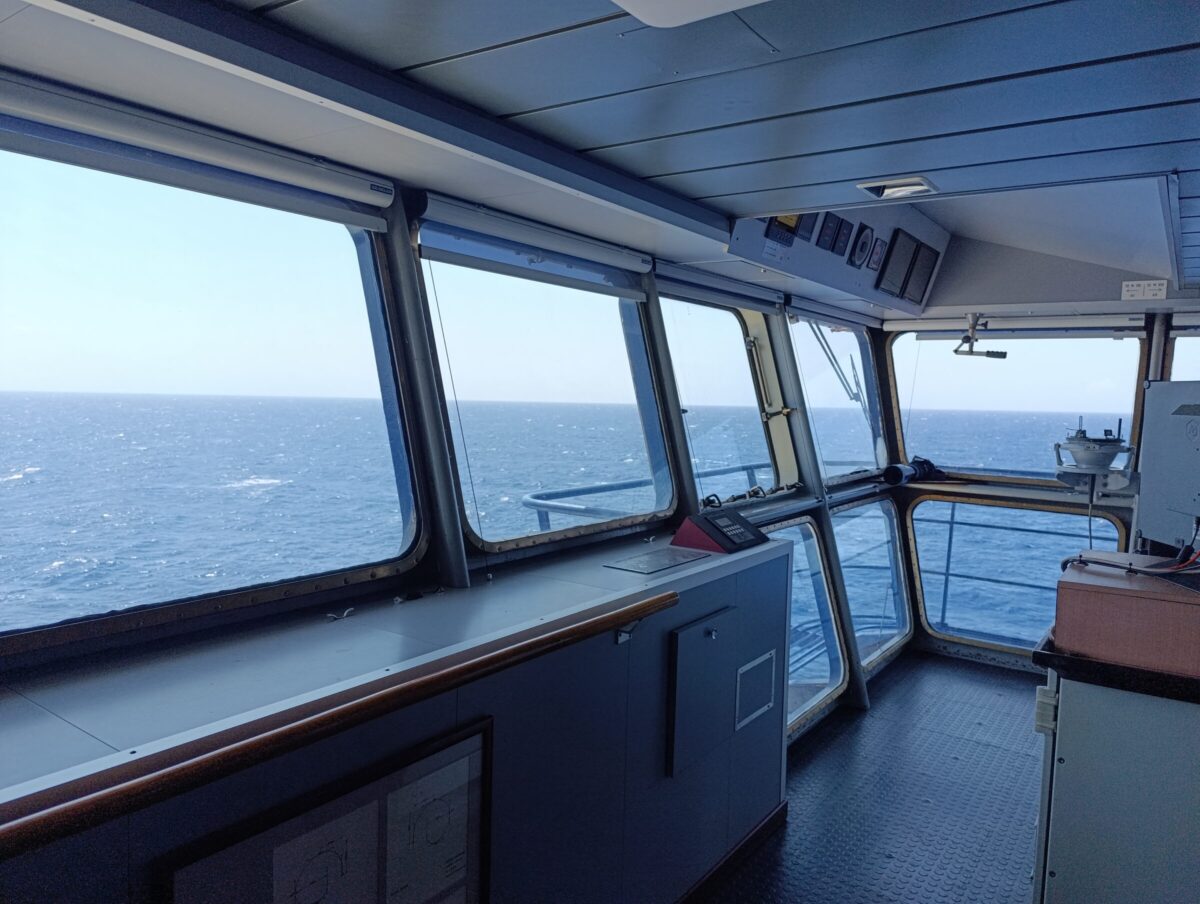
The navigation is first time visual : it is done at the wheelhouse, with the big glass platform which offers a maximum visibility for the observation and the monitoring at sea and at the dock (Figure 3). The watch lieutenant monitors the ship from the command post and ensures his to respect the way chosen in taking account of contingencies. The ship is equipped with a forward and aft telegraph propulsion.
Figure 3. View from the bay window in the command post on the wheelhouse. ©Jade
Tools for the navigation
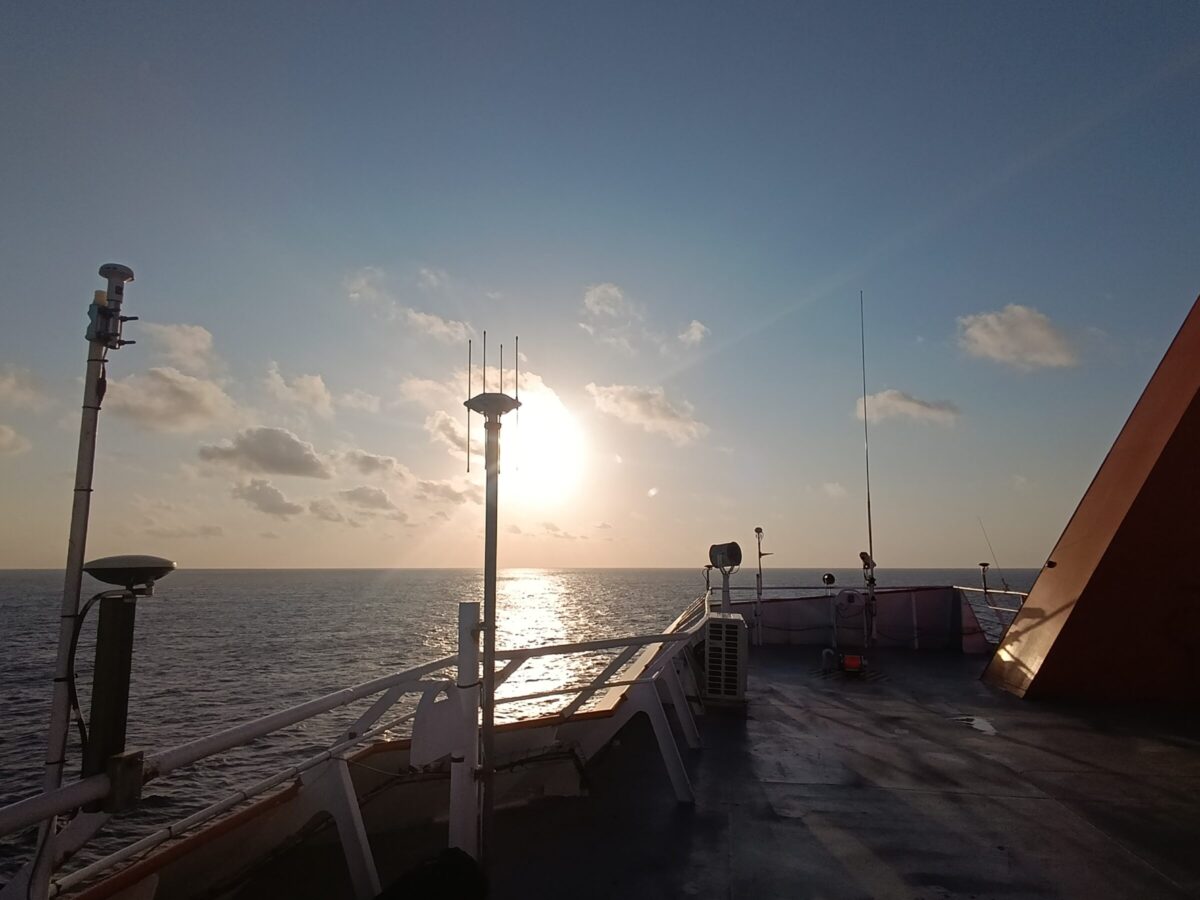
A lot of tools help with navigation and decision-making. The geolocation is acquired by a GPS system (Figure 4) and the anemometers, providing an immediate visual indication of position with corrections applied in real time.
Figure 4. Picture of the external GPS receiver antennas on the deck. ©Jade
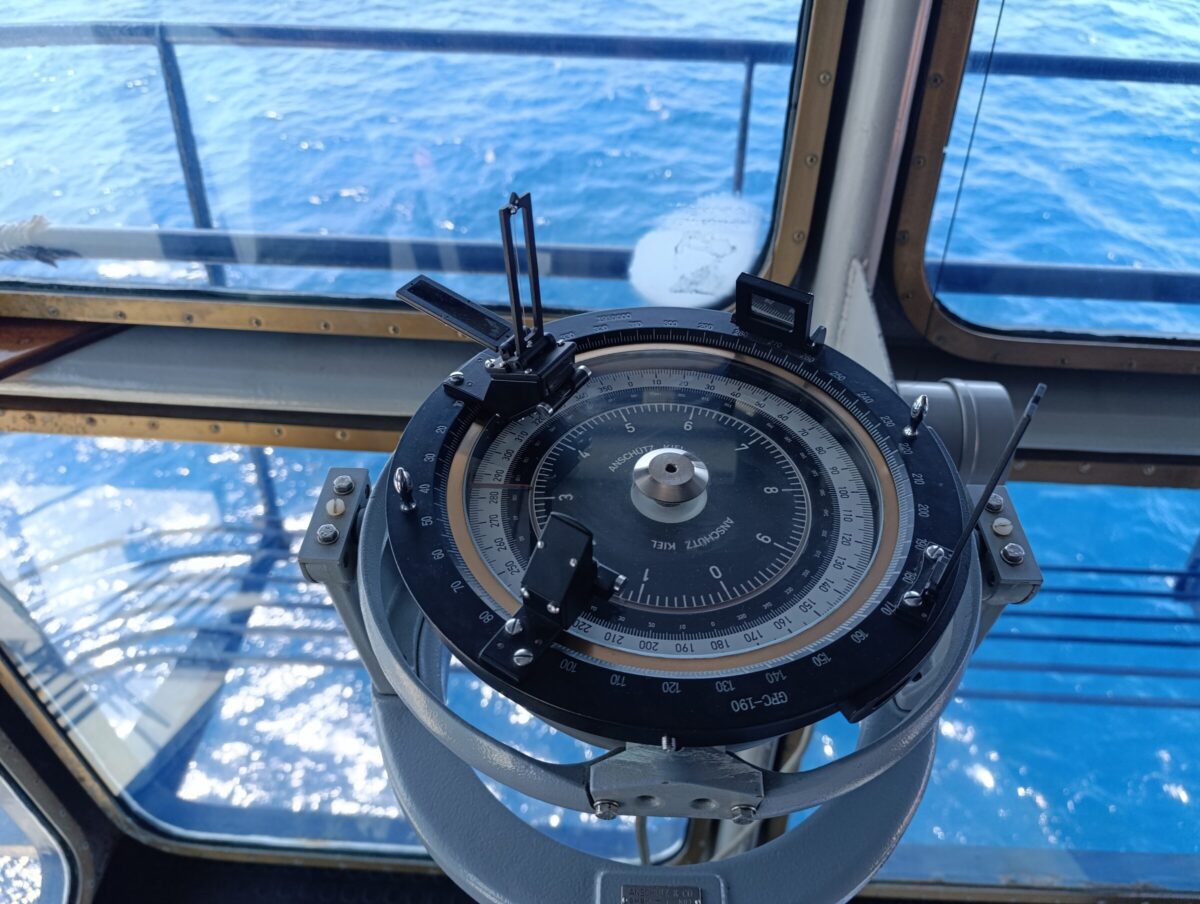
The following way needs to take account of the wind, the wings… which do drift the boat. It is important to pay particular attention to other users to avoid potential risks of collision. The identification of other boats is often done with an automatic identification system (AIS), which informs about the ship around us’ GPS position. Silent ships said phantom often can be identified thanks to a radar system when they are not equipped with them (militaries, pirates…). However, the utilisation of radars is limited in case of heavy swell. Finally, a lot of other tools like the gyroscope (Figure 5), the radar (aerial) and the numeric map help the watch lieutenant, completed by an automatic navigation system.
This navigation system allows a real time visualisation of the location with the position vector and the GPS point predefined to follow the fixed way. The gyroscope (Figure 5) allows to have the true cap (angle between the ship’s axis and true north).
Figure 5. The gyroscope on the wheelhouse. ©Jade
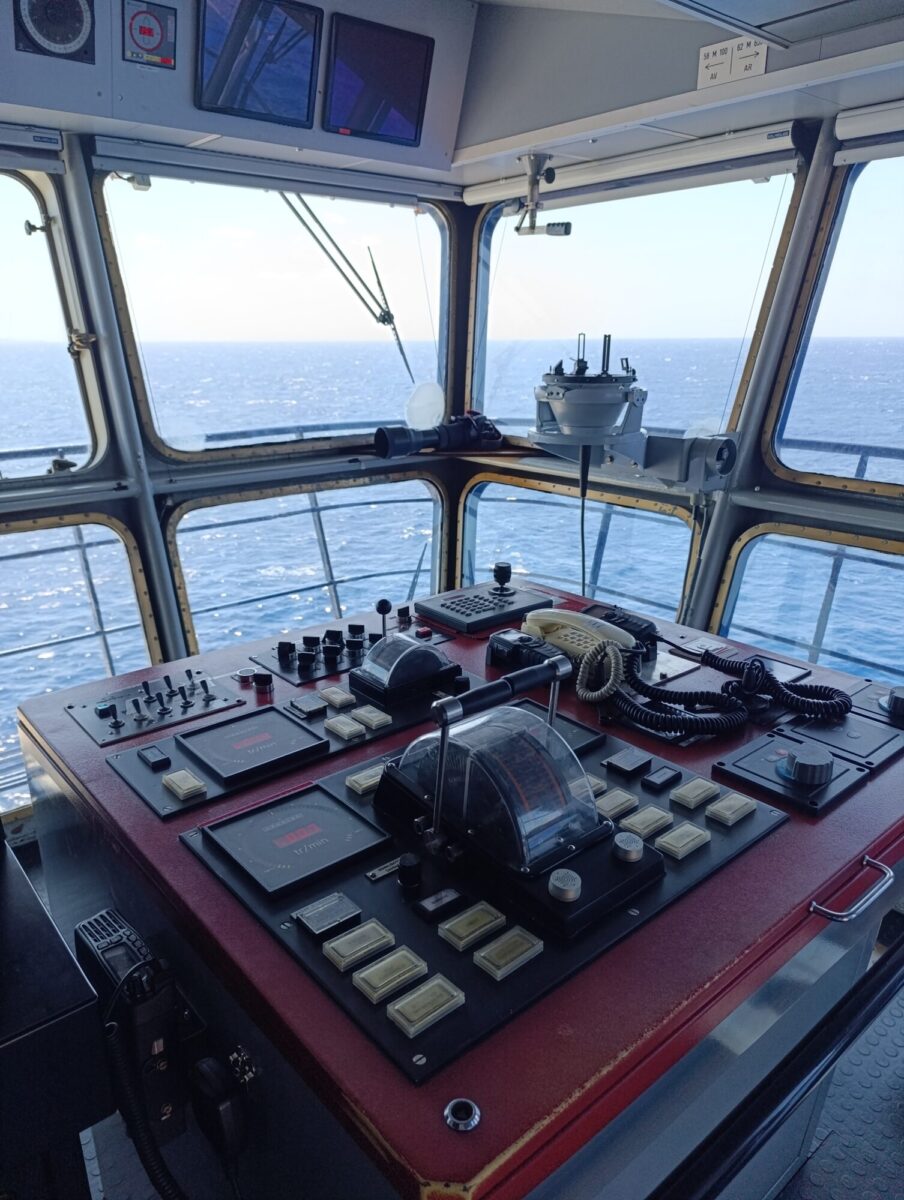
On the left side of the wheelhouse, we find a console called “DP” (Dynamic Positional System, Figure 6). This enslavement system is used during manoeuvres (recuperation of tools…) allowing to stay at the same GPS point without drift with the currents. The position is recalculated at all times thanks to the GPS and the anemometers a for keeping the ship at the desired position.
Figure 6. Picture of the dynamic position console at the wheelhouse. ©Jade
Security on board
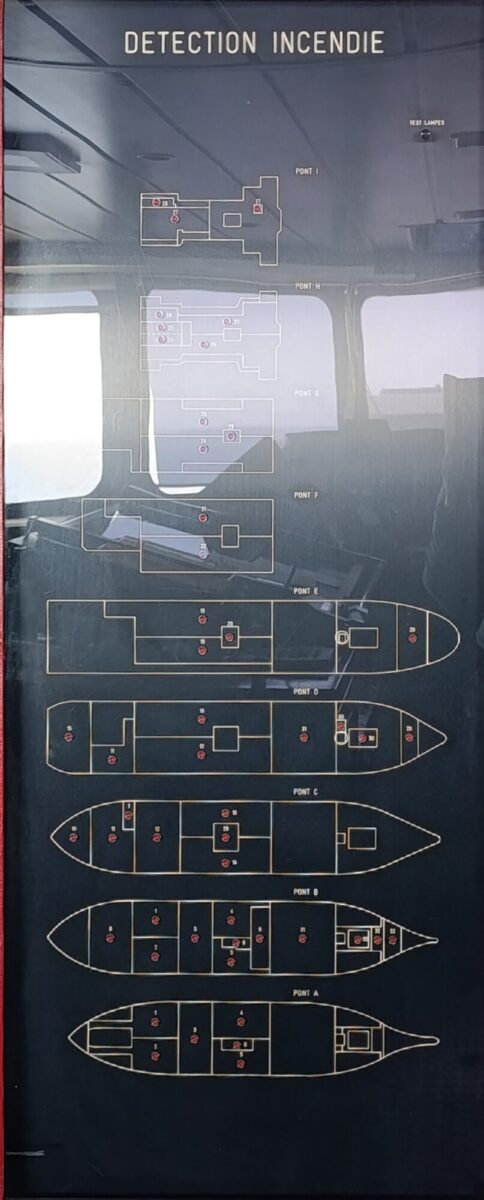
In addition to his role for the navigation of the ship, the wheelhouse takes part in the management of the state of the ship, the seafarers and the crises situations. Indeed, the wheelhouse is the headquarter of emergency situations like the management of the possible starts of fire. Systems of command allow to communicate, inside the ship and outside it, and to monitor in real time the state of the different ship’s compartments (Figure 7). Exercises are regularly organised and communicated by the wheelhouse to passengers and crew members to keep on alert and master as is possible the risk management and the physic integrity of seafarers and of the vessel. Exercises of start of fire in different spaces are organised every week, constituting in this case the higher risk. Likewise, exercises of watercourses or of abandonment are organised monthly and at each beginning of mission.
Figure 7. Picture of the fire detection panel on the wheelhouse. ©Jade
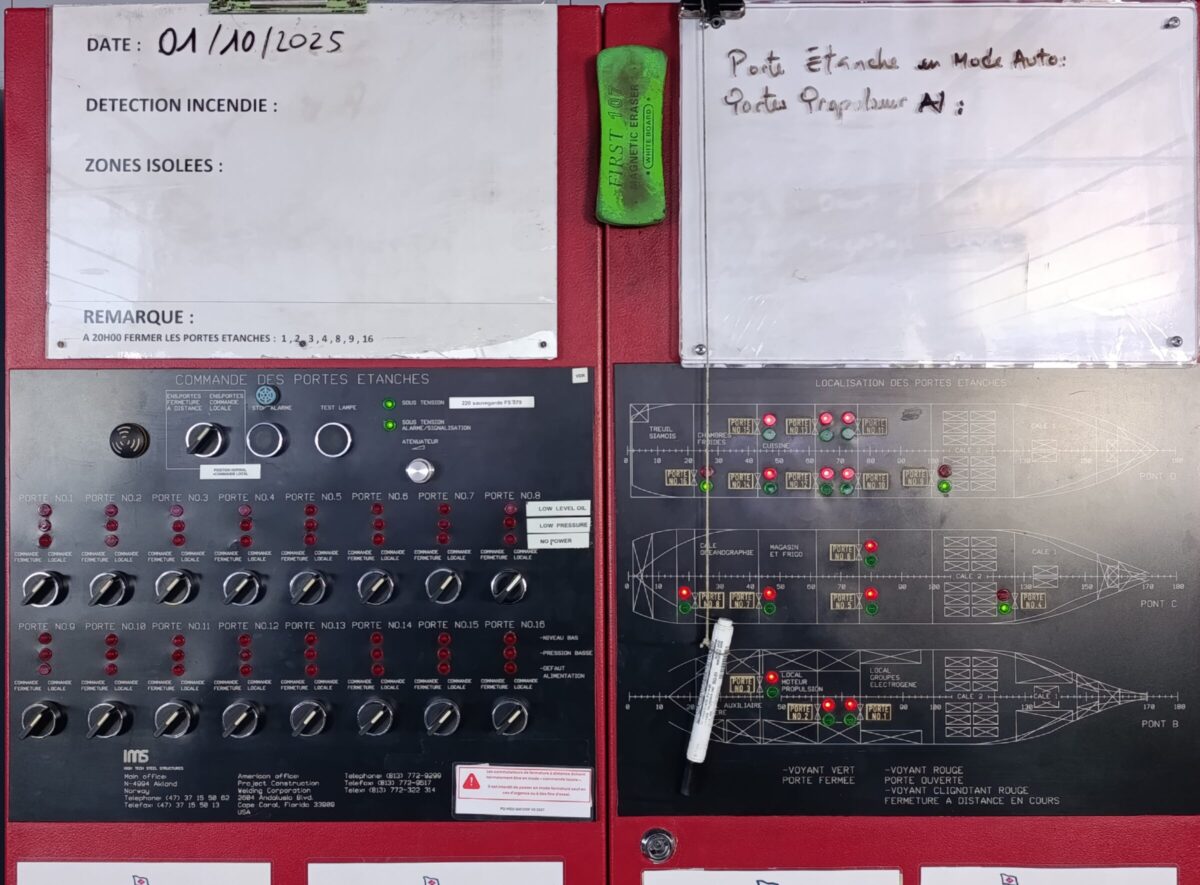
Devices like the alarm, the captors and the watertight doors and fire doors’ commands (Figure 8) ensure a quick reaction in case of incidents, allowing to secure and insulate the compartments impacted by a fire or a flood.
Figure 8. Picture of the monitoring panel for the watertight and fire doors on the wheelhouse. ©Jade
Back to the page MAYOBS33-Information
 Attention, vous utilisez un navigateur peu sûr !