Visit of the machines
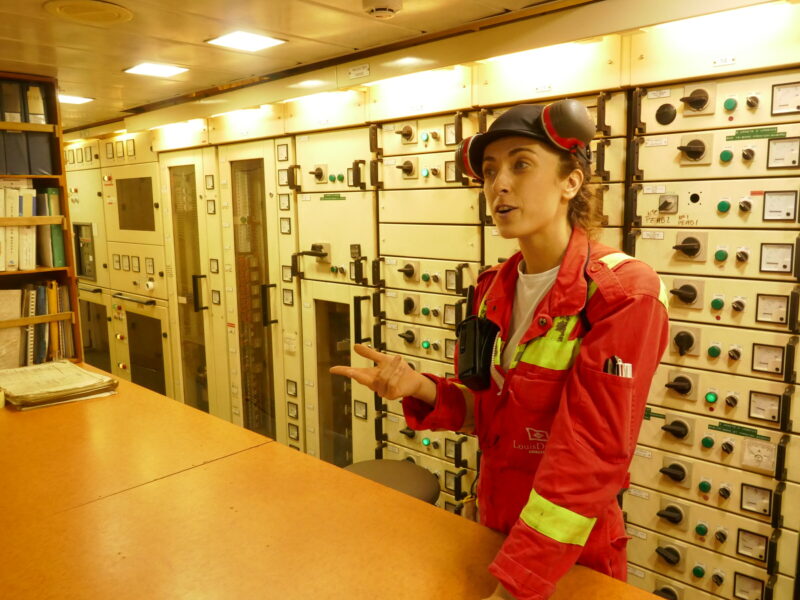
We start our visit by the PC machine, called DA. In this room, one of the few air-conditioned machines, Carla, the third mechanic on the ship, equips us with ear defenders. Indeed, the quantity of machines necessary for the operation of a ship of this size produces a certain volume level. We are all equipped with security shoes, helmets and other personal protective equipment needed to navigate the sometimes narrow, low-ceilinged corridors.
The motors
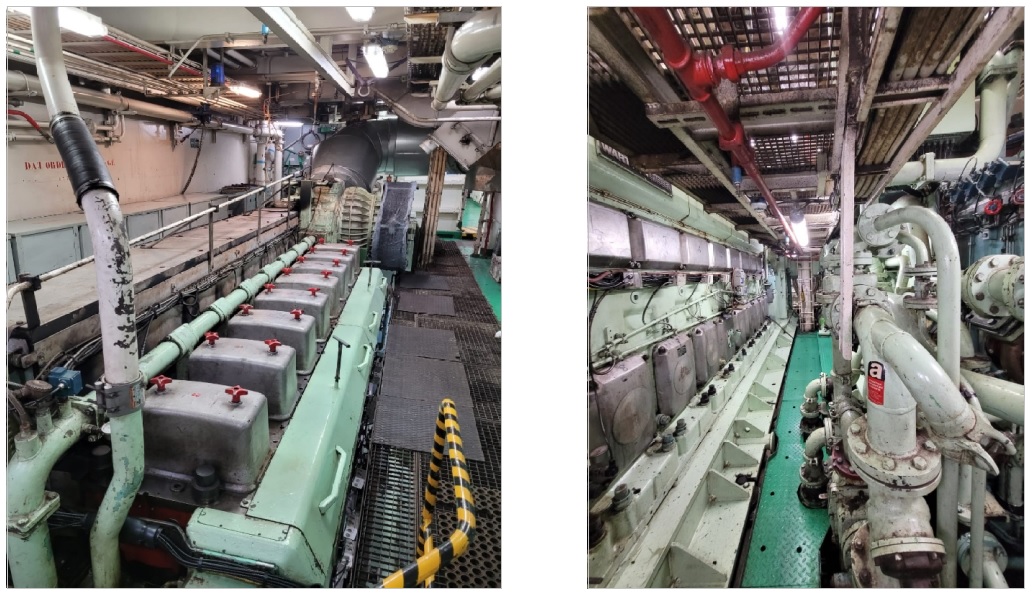
All the energetic production on the boat is electric. Three electrogene groups (two 8-cylinders and one 6-cylinders) use the fuel and power the two main electric engines which are behind the propulsion of the ship. The motors’ electric power allows a greater precision in terms of power and improved fuel efficiency. Indeed, just one group (Figure 1) turns during the transit, around 80% of its power, that allows it to reach a cruise speed of 10 knots.
Figure 1. Injectors for engine bank 1 (left) and engine bank 1 (right). ©Jules
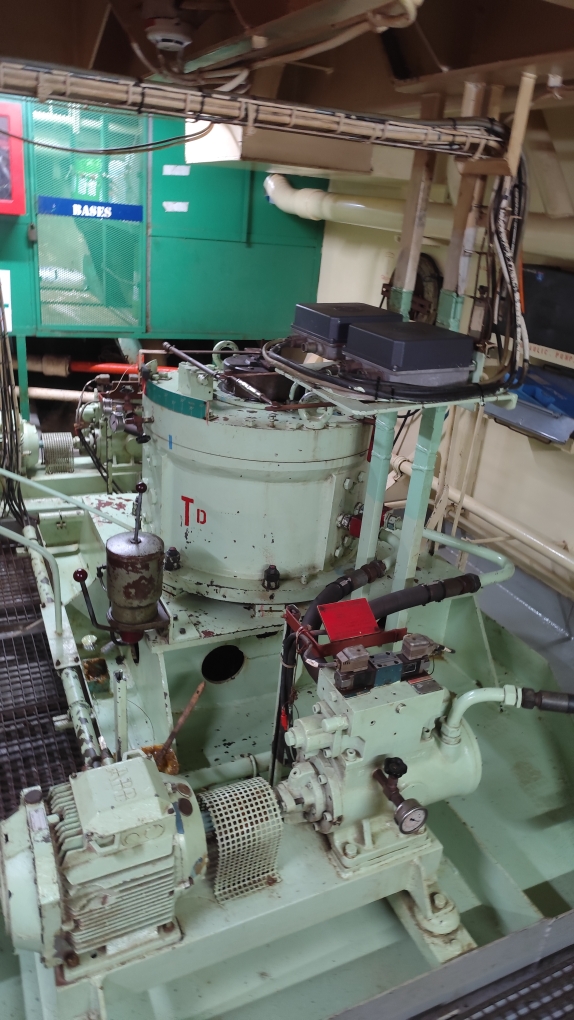
When we want to accelerate or use the Dynamic Positioning (DP, position-holding programme with drift compensation by switching on the side engines, it can be necessary to use two or three motors during the same time. During the acquisition, the navigation relies on the first motor; this is mounted in such a way as to minimise noise transmitted to the hull and thus avoid disturbing the waves detected in the water column. The rotation of the ship is done by two rudders monitored with precision (Figure 2). After the change of direction (precise to within a tenth of a degree), a certain quantity of oil is injected in the two ones, in the goal to move the device.
Figure 2. Picture of the device to steer. ©Jules
Auxiliaries systems
The Marion Dufresne is a real little city which benefits from a great number of auxiliaries systems useful for the autonomy and the maintenance of the boat. All these systems are powered by the generators which issue a current transformed in 320 V.
Water management
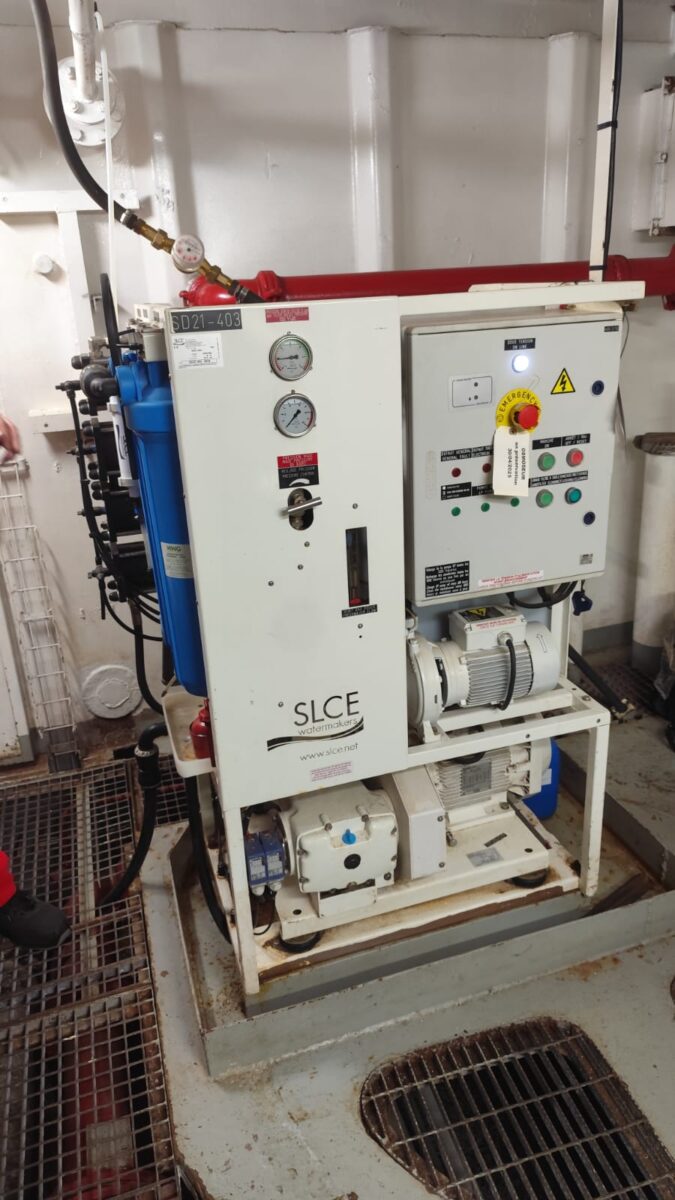
The water management on board is shared in some systems. Firstly, the worn out water, called “black water” is thrown away after treatment at the sewage treatment works on board. The grey waters are filtered and directly threw away. After the boat is equipped with a desalinisation plant by reverse osmosis, that allows it to create its own drinking water. The principle of the machine is based on filtration : the water is filtered and it is then placed in an environment under very high pressure in order to force it through a very fine filter that traps all impurities and any other ions. Finally, the water must be remineralised to be consumed. (Figure 3). The distilled water can is used to cool the machines.
Figure 3. Reverse osmosis system. ©Jules
The ballasts
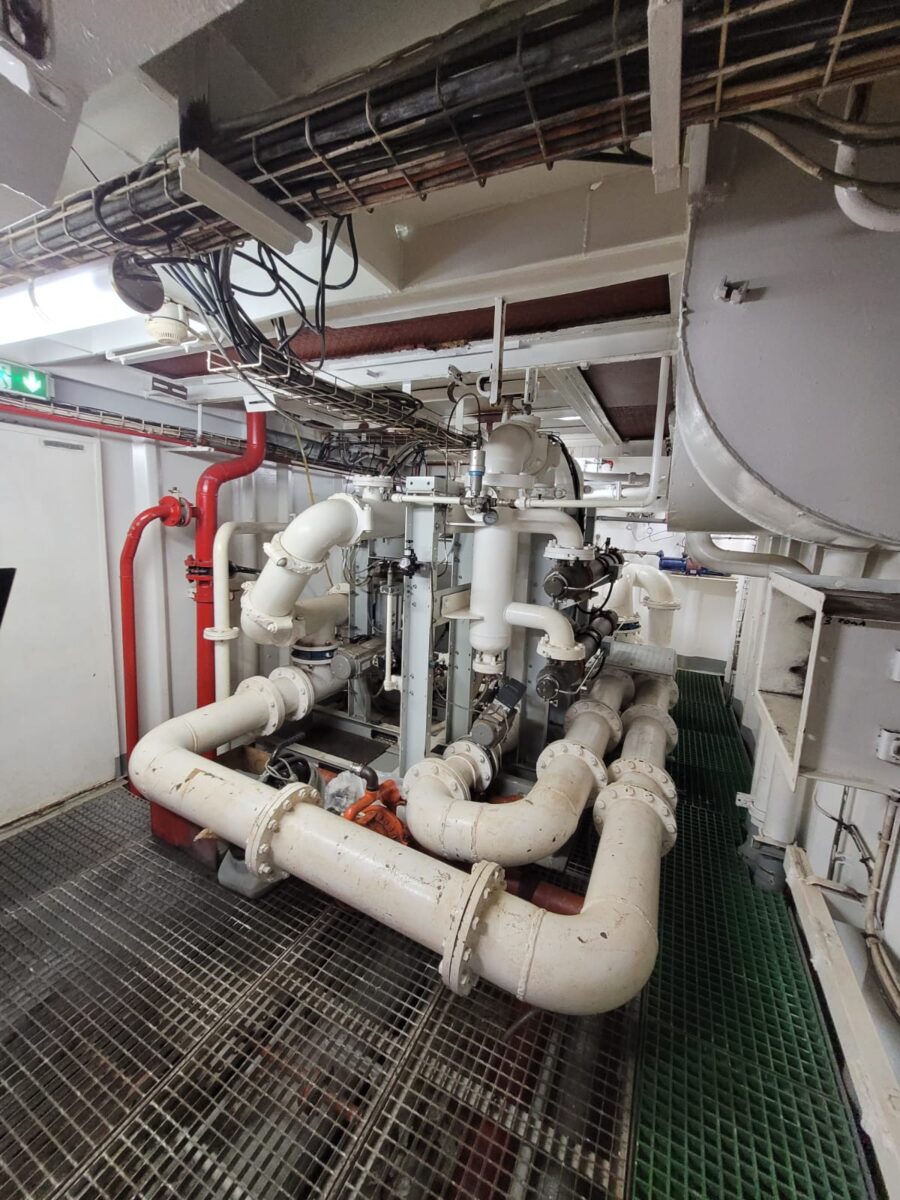
To keep a better stability, the ship is equipped with ballasts, in other words tanks which it can fill in to balance it. However, the story showed the ballast discharge (the process of discharging water from ballast tanks into the sea) is dangerous for the environment because ships discharge waters taken in a part of the planet in another place sometimes sensitives. It’s particularly a vector of the transport of invasive species (algae, crustaceans, bacteria…). Today, the law imposes a treatment of ballasts’ waters before discharging it in another place. It is why the Marion Dufresne is equipped with a link of treatment of ballasts’ waters (Figure 4).
Figure 4. Ballasts’ water treatment plant. ©Jules
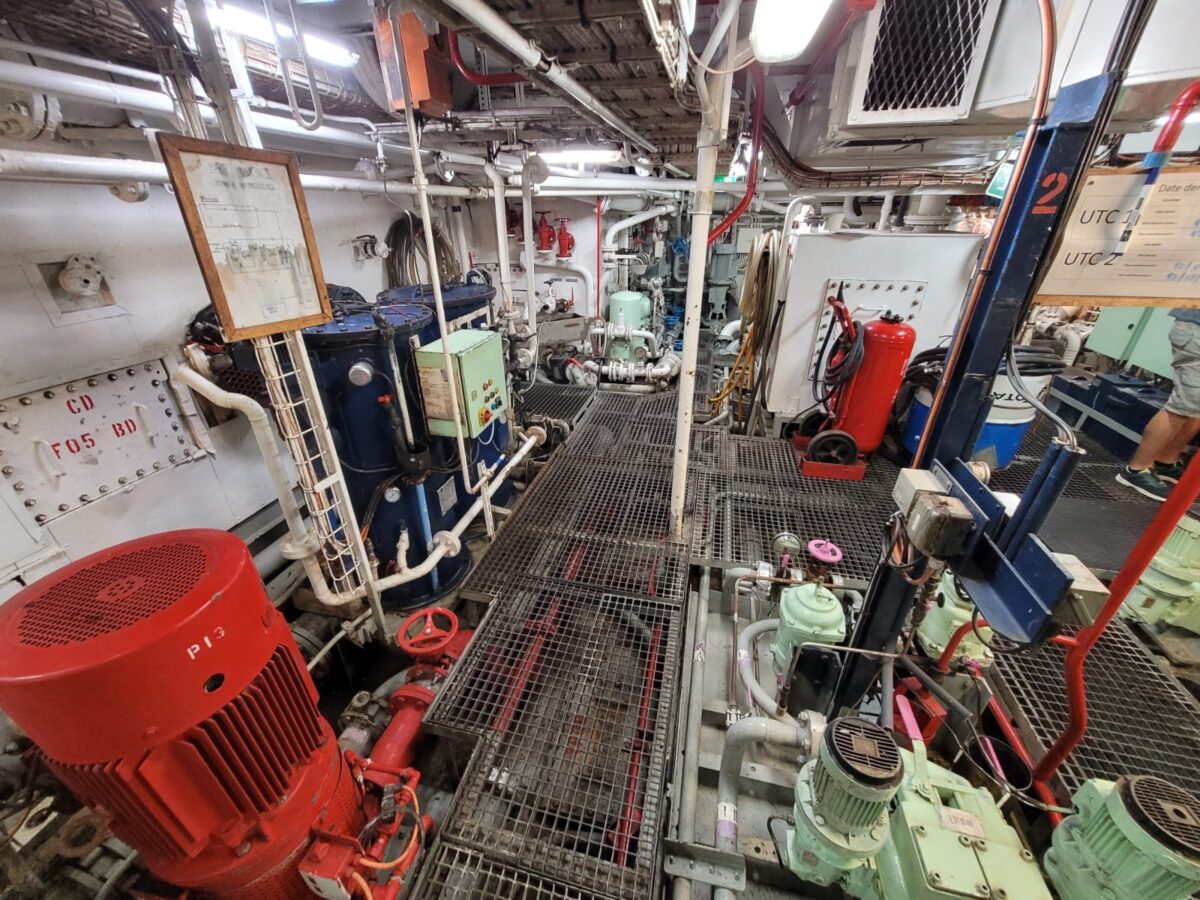
The water in the flat out mixes it with oils. A treatment link of these emissions allows to separate the oil and the water to throw out the water only and to avoid to drain the thousand litres of oil (Figure 5).
Figure 5. Oils treatment plant on the Marion Dufresne. ©Jules
The thermo-regulation
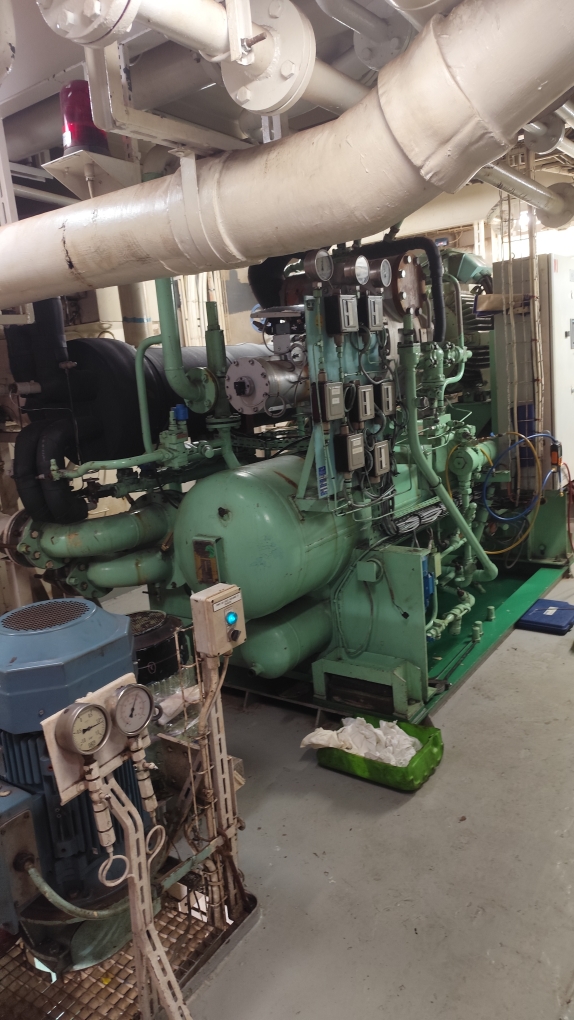
The upholding of a fresh temperature on the boat needs a powerful air conditioning station, and able to keep a temperature on the 6 decks where there are the bedrooms and the living rooms (Figure 6). The temperature is regulated directly from the machine’s room and served by pipes all the boat. It is especially essential to regulate the temperature of rooms where there are the computing servers, the computers and the different tools requiring conditioning air.
Figure 6. Conditioning air plant on the Marion Dufresne. ©Jules
Controls, maintenance and repairs
To operate all the machines, a dozen people take care of the monitoring, the maintenance and the piloting when it isn’t done from the machine PC.
A key part of the maintenance operation takes place in the workshop; this is where basic structures are built, but above all, this is where repairs are carried out. Indeed, whether it’s small engines (excluding those used for navigation) or even coffee machines, everything is recycled and, where possible, repaired!
Back to the page MAYOBS33-Information
 Attention, vous utilisez un navigateur peu sûr !